Tuesday, January 28, 2014

The Hidden White House, Robert Klara

http://www.amazon.com/The-Hidden-White-House-Reconstruction/dp/1250000270/ref=sr_1_sc_1?ie=UTF8&qid=1390923290&sr=8-1-spell&keywords=the+hidden+hite+hosue


The Hidden White House: Harry Truman and the Reconstruction of America’s Most Famous Residence


Robert Klara


Category: Nonfiction: History: Politics & Washington, D.C.

Synopsis: A recount of the 1948-1952 White House renovation project, carried out under President Truman.

Date finished: 10 January 2014

Rating: *****

Comments:
I was about 30 pages into this book when I told my husband I’d found one of my top ten books of 2014. Within another 20 pages, I was on Amazon ready to buy everything else Robert Klara has ever written (which, disappointingly, was only one other book). That’s how much I enjoyed this book, from the very beginning.

Yes, I’ve come to have a full-blown love affair with books about history that don’t read like history books, if you know what I mean. This one fits the bill so well, and I’m so smitten, I just don’t even know what to say.

Why did I like it so much? Well, the writing has a great deal to do with it. It’s written in a simple, engaging style that gives you lots of facts that are fun but not “fluffy” and never descend to tedium. It’s a fine line, and Klara walks it expertly.

I’ve long had a fascination with the White House, and I’ve always wished I knew more about American presidents, especially 20th-century ones. This book not only captures the scope and frenzy of the 836-day White House renovation, but serves as a primer to Harry Truman and his presidency.

On a more subtle level, though, this book is about human nature, the delicate balance and inevitable compromise between traditions and modernization, and the conundrum of updating an historic building in order for it to remain a stage for “future history.”

Klara covers the renovation in exhaustive detail, and each chapter was captivating. For instance, souvenir hounds from all over America were asking for a piece of the old building. So the commission set up a souvenir program and filled 30,000 requests. In another chapter we learn of the assassination attempt on Truman’s life while he and his family were living in the hard-to-secure Blair House (housing across the street from the White House traditionally used to board visiting dignitaries).

And of course, we learn of all the ups and downs and budgetary woes of the $5.8 million mid-century reno. We learn of the deplorable state of the mansion when Truman takes office and of the years of abuse and poor choices heaped upon the aged structure. The walls were bowed and crumbling, the beams (some dating back to the fire of 1812) were giving way, the floors bounced like springboards, and 1,200-pound chandeliers were about to fall. Some in Congress wanted to raze the White House and start over. Some wanted to build a new White House and turn the current one into a museum. It was finally decided to keep the original exterior walls and build a steel frame inside, correct the footings (the White House was built on swampland—the location chosen by President Washington, who, incidentally, was a land surveyor), and gut and rebuild the interior. A secret $1 million bomb shelter would be added to the new basement level. 

In many ways, the renovation failed miserably. (1) The budget was so tight there was barely any money allotted to furnishing the completed structure. Since there was very little that could be salvaged and reused, the scant money set aside had to be stretched by using reproduction furniture and fixtures. (2) Truman, wanting to spend the last part of his presidency in the White House, rushed the work mercilessly, causing corners to be cut. (3) The renovation commission didn’t care to save the old White house details; much of it was sent to the dump. (4) The White House architect’s obsession with Federal-style purity did not allow the mansion to feel up-to-date. Many felt the new White House had an institutional feeling. Eleanor Roosevelt told others she thought it looked like a Sheraton Hotel. Truman left Washington thinking that the exterior of the White House was much improved, but the inside was worse than ever.

The last chapter is kind of heart-breaking. No one seemed to like the new White House, but only one man (the White House architect) had been interested in holding onto the character of the White House by retaining the charming pieces that were discarded. But as Truman issued his drop-dead date—and then moved it up a week—time ran out, and creating new moldings, etc., was just cheaper and faster than repairing crumbling ones.

But, sometimes history is like that. Sometimes we have to learn from our mistakes—which means making big mistakes. At this period in history, America was recovering from WW2, the Soviets built the bomb, the Korean War broke out. Nations were amping up their ways of killing and defending themselves, Americans feared the spread of communism. And in the middle of it all, Washington rebuilt the manse that had housed 32 presidents and would go on to house another 11. It made mistakes in execution but not in motive.

I can’t recommend this book highly enough to anyone looking for a slice-of-history book with real heart.

Would you recommend this to a friend?
Absolutely.
Monday, January 27, 2014

Currently: Cold, and the Christmas tree's still up


Currently...

Briefly: It was -15 degrees on my way to work this morning. Natural gas customers in our area have been asked to keep their homes at 60 degrees until further notice. Apparently there’s a problem with our energy company’s supplier. While 60 should feel sufficient, it actually feels sort of punishing. There will be no getting warm for the foreseeable future.

Time and Place: Monday

Eating and Drinking: Looking forward to lunch: meatloaf and cheesy potatoes casserole.

Reading: I’m reading Billy Collins’ newest collection of poetry, Aimless Love. It’s fabulous, as always. I don’t think the man could write a bad grocery list.

Watching: Don’t watch much. Had our usual Sunday night episode of Monk (I think we’re on season 3, just when Sherona is replaced by Natalie), followed by King of Queens—every episode of which we have memorized.

Listening: This morning’s random MP3 songs featured: the Driving Miss Daisy theme song (“Driving” by Hans Zimmer), Celine Dion, Gloria Estefan (my MP3 randomizer wizard has a fondness for Estefan and Madonna), Lenka’s “The Show,” and Culture Club (or was that yesterday?).

Blogging: Have to finalize my review of The Hidden White House to post this week. Also working on next week’s Top Ten Tuesday.

Promoting: I’ve got nothing.

Hating: The cold. Also, overly preoccupied with how much time housework takes up on Sunday and how many hours hubby and I are spending on church work these days. I don’t seem to have a minute to myself all day to just think about things I want to think about.

Loving: Spent time with my grandson Friday night. My favorite part of Friday nights with him is when he announces, “And now, it’s grandma snuggle time.”

Avoiding: Writing church website copy. It feels a little overwhelming.

Also, the Christmas tree is still up.

Anticipating: I have a shipment of 13 books arriving this week from Amazon. Some titles: Quiet by Susan Cain, The Boys in the Boat by Daniel James Brown, I Am Malala by Malala Yousafzai, Five Days at Memorial by Sheri Fink, and Seabiscuit by Laura Hillenbrand.

Tuesday, January 21, 2014

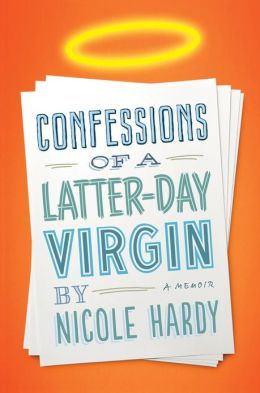
Confessions of a Latter-Day Virgin, Nicole Hardy


http://www.amazon.com/Confessions-Latter-day-Virgin-Nicole-Hardy/dp/1401341861/ref=sr_1_1?s=books&ie=UTF8&qid=1390331840&sr=1-1&keywords=confessions+of+a+latter-day+virgin


Confessions of a Latter-Day Virgin: A Memoir


Nicole Hardy


Category: Nonfiction: Memoir: Religion; Mormonism

Synopsis: Hardy recounts her life as a Mormon and the separation she feels from her sexuality.

Date finished: 3 January 2014

Rating: ****

Comments:
For the first half of the book, I thought this might well be one of the best books I’ll read in 2014. But then I got tired. And then it sort of devolved into something that I wasn’t quite comfortable with. What saves this book is the writing. A blogger last year said of Cheryl Strayed that she can write like—and she used a word I just don’t use, so I’m going to use the word “champ,” to make me look even more square than I am. Well, Hardy can write like a champ, too. I mean holy smoke. (I’d say Hardy is on par with Elizabeth Gilbert, though, as Strayed’s writing doesn’t knock me on my keister quite like Gilbert’s does. I feel Gilbert is more intellectual and Strayed is more emotional—in a loose cannon sort of way.)

I have no idea whatsoever what to say about this book. Really. None. I’m still processing it and deciding how close to it I want to stand.

I’ll start with this. I’m not a Mormon, but I respect the Mormon moral code, and I’ve read a lot of Mormon memoirs. I’ve read them by Mormons who remained faithful and by those who broke from the church. Those who were bitter and those who just moved on. Some who fit into the church and some who tried to make the church fit into them. This one straddles all of the lines. In some ways, it’s more of a whole picture of the Mormon church. In other ways, it’s a much more narrowed view. This book deals with one thing: how the Mormon church’s ardent stance on premarital sex makes a young woman feel divorced from her sexuality, her body, and her femaleness. A subplot is how the Mormon church’s belief that a Mormon woman’s ambition—indeed, her very identity—is motherhood, makes a woman feel shame for not wanting to have children.

But here’s where Hardy and I (or the book and I, to make it less personal) diverge: I always root for the Mormon to stay in the church, for the woman to want children, for virginity and family and faith and prayer and finding yourself whole within the church instead of in spite of the church.

This is a very personal book. It’s raw and emotional. I can understand how Hardy felt because she shows how she felt. She doesn’t demonize others or act the victim, though she feels the victim and feels demonized. My heart ached for Hardy.

But it didn’t agree with her.

I was rooting for the church all the way to the end. I guess you could say the church lost. But, the world gained a darn good writer.

Would you recommend this to a friend?
Yes. And I think this would be a good book club read and discussion.

Other books about being Mormon:
The Book of Mormon Girl
The World’s Strongest Librarian
Heaven is Here
Becoming Sister Wives (polygamist Mormons)
Escape & Triumph (FLDS)
Stolen Innocence (FLDS)

Wednesday, January 15, 2014

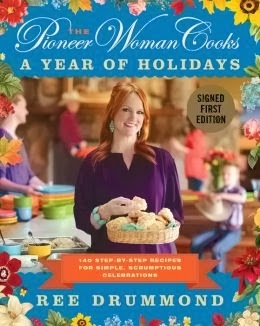
Book Review - The Pioneer Woman Cooks: A Year of Holidays, Ree Drummond


http://www.amazon.com/Pioneer-Woman-Cooks-Step---Step/dp/0062225227/ref=sr_1_1?ie=UTF8&qid=1389819971&sr=8-1&keywords=pioneer+woman+cooks+a+year+of+holidays


The Pioneer Woman Cooks: A Year of Holidays: 140 Step-by-Step Recipes for Simple, Scrumptious Celebrations 


Ree Drummond


Category: Cookbook

Synopsis: The Pioneer Woman is back with her third cookbook, offering recipes for a year’s worth of holidays.

Date finished: 31 December 2013

Rating: *****

Comments:
I love Pioneer Woman. I’m sorry, I just do. I don’t know why I apologized other than to say that this book was sort of panned in Barnes & Noble reviews (though Amazon folks loved it…).

Also, there’s this. I bought my mother the first two Pioneer Woman cookbooks (at her request), and she returned them a week later because she knew she’d never make a single recipe in the books. They called for weird things she never had on hand, she said. Now, the reason I LOVE these cookbooks is because they are as close to the home cooking I grew up on as I can find. To have my mother dispute that is odd. I was so sure she’d love them.

But then, I have to remember that my mother has likely never used garlic in a dish in her life.  

To each her own, I guess.

All this by way of saying The Pioneer Woman has done it again. If you liked her other cookbooks, you’ll love this one. It is 400 pages long. Four. Hundred. Pages. People. And the recipes, though billed as “holiday,” aren’t too theme-y to be practical. I don’t have much use for theme-y. There are loads of dishes I’d like to try including Dr. Pepper Cupcakes, Grilled Corn Dip, and Broccoli Cheese Soup.

Some folks might object to Pioneer Woman because she hasn’t gone Vegan or Gluten-free or Paleo, but that’s why I love her. She’s one of the last hold outs. She uses butter. And bacon. And eggs. And the occasional tomato from a can. All of it is fine by me.

Plus, I think she’s pretty funny. Someone you laugh with, not at, even though her humor is pun-y and weird. I like her cheerfulness and even how painfully awkward her husband and kids are in front of the cameras on her show.

The cookbook is well laid out, well-edited, and colorful. And her photography is superb. My only beef, if I had one, is that this would likely be a hard cookbook to cook from, as it’s rather heavy and unwieldy. I always go to her site and print the recipes from her books that I want to cook.

In short, I find PW adorable. And I love her cookbooks just as they are. Over and out.

Would you recommend this to a friend?
Yes. But I would not recommend it to my mother.

You might also enjoy:
The Pioneer Woman Cooks: Food from My Frontier
The Pioneer Woman Cooks: Recipes from an Accidental Country Girl

Monday, January 13, 2014

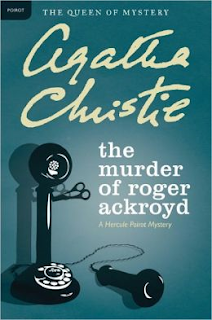
Book Review - The Murder of Roger Ackroyd, Agatha Christie

http://www.amazon.com/Murder-Roger-Ackroyd-Hercule-Mysteries/dp/0062073567/ref=sr_1_1?s=books&ie=UTF8&qid=1389647795&sr=1-1&keywords=the+murder+of+roger+ackroyd


The Murder of Roger Ackroyd


Agatha Christie 


Category: Fiction: Mystery

Synopsis: Roger Ackroyd is found stabbed in his study and his house is teeming with likely murder suspects.

Date finished: 31 December 2013

Rating: ****½

Comments:
This is only my second Christie mystery, so I still don’t know quite how she operates. I guess I can be satisfied going with the flow and allowing things to unfold before me. That trait is a blessing when reading Christie. (Or perhaps I just don’t have the dexterity of mind to solve one of these murders, so I have to let the story unfold.)

At any rate… Did I solve the crime? No. But I had wondered about the possibility of whodunit doing it. So I should get points for that. Right?

I’ve seen this book listed as a favorite Christie mystery by more bloggers than any other. Having only read this and Murder on the Orient Express, I can’t much comment, but I admit to being a teensy bit sad finding out that this was perhaps as good as Christie gets. Don’t get me wrong, I didn’t dislike the book, but I did feel a little duped by it.

I fear that discussing the plot will become a spoiler, so I’ll leave it up to you to read the book.

Would you recommend this to a friend?
Yes.

You might also enjoy:
Any of the bazillion other Christie mysteries.

Friday, January 10, 2014

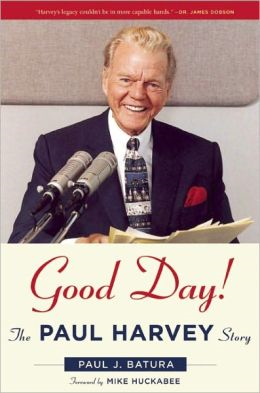
Book Review - Good Day!, Paul Batura


http://www.amazon.com/Good-Day-Paul-Harvey-Story/dp/1596981016/ref=sr_1_sc_1?s=books&ie=UTF8&qid=1389390669&sr=1-1-spell&keywords=good+day%21+baturea


Good Day!: The Paul Harvey Story


Paul Batura


Category: Nonfiction: Biography

Synopsis: Batura fleshes out Paul Harvey’s long history in the radio world.

Date finished: (approx.) 27 December 2013 

Rating: ***½

Comments:
I wanted to love this book, because I love Paul Harvey. I grew up listening to his “Rest of the Story” stories at lunchtime (in the summer, anyway). He could tell a good story. And he was clever. He reminded me of the men I grew up around, grandfathers and uncles who were honest, strong, church-going, and patriotic. He embodied all of the best parts of American characteristics.

This book didn’t undermine that perception at all. Batura is obviously a fan of Harvey’s. There was no dishing, no unsavory surprises. It would seem Harvey was exactly who we all thought Harvey was.

The trouble is, the book wasn’t particularly well-written. And the editing was terrible-with-a-capital-T. Batura was writing this book at the time that Harvey passed away. And being the first biography of Harvey’s life, he and his publishers were likely in a huge hurry to get it printed. They seemed to skip editing altogether. And it shows. I have little tolerance for that, so my patience wore thin.

Still, I learned quite a bit about the man who is a broadcasting icon. I think it’s safe to say that never again will we have another Paul Harvey on the radio.


Some Harvey facts:

  • Harvey was born Paul Harvey Aurandt in 1918 in Tulsa, Oklahoma.
  • He started in radio in 1933. That year he also became a licensed pilot.
  • Paul and his new bride, “Angel,” were in the radio business in Hawaii, but returned home on December 5, 1941—two days before the Pearl Harbor attack. (Awful timing for a newsman!)
  • Harvey would eventually command $30,000 per appearance.
  • Paul Harvey Jr. became a concert pianist and was responsible for writing “The Rest of the Story” stories.
  • In November 2000, Harvey signed an unprecedented 10-yr $100 million contract. He was 82-years-old.
  • President George W. Bush awarded him the Presidential Medal of Freedom in 2005.
  • Harvey died in 2009 at age 90.

Would you recommend this to a friend?
There is another biography of Harvey called Paul Harvey’s America, and I couldn’t decide which to read, perhaps that book is better.

Thursday, January 9, 2014

Book Review - Daughter of Empire, Pamela Hicks

http://www.amazon.com/Daughter-Empire-My-Life-Mountbatten/dp/1476733813/ref=sr_1_1?ie=UTF8&qid=1389216171&sr=8-1&keywords=daughter+of+empire


Daughter of Empire: My Life as a Mountbatten


Pamela Hicks


Category: Nonfiction: Memoir: England

Synopsis: Hicks recalls her early life as a daughter of a prominent English family.

Date finished: (approx.) 23 December 2013

Rating: ****

Comments:
I put this one on my “to read” list after finishing Elizabeth the Queen. Pamela Hicks showed up in that book as she must have given interviews to its author. She is the cousin of not only the queen but also of the consort Prince Philip. (Yes, the queen and her husband are cousins!)

The famous photograph taken by the press of Philip helping Princess Elizabeth with her coat was taken at Hick’s sister’s wedding. The photo ignited a maelstrom of speculation about the Princess and Philip. The press decided they were an item.
 
This was a fascinating book in that it really showed the role of England around the globe. Hicks was the daughter of Dickie Mountbatten, who, as I understand it, was instrumental in winning WW2. He was a naval officer and Supreme Allied Commander during the war. After the war, he became viceroy of India, sent to oversee the transfer of power from English governing to an independent Indian government. This move upset Winston Churchill who thought Mountbatten was giving away “the jewel in her crown.”

Basically, this book is about Hick’s first twenty-odd years of life shuffling along behind her parents as they fulfilled various missions and filled various posts for the crown. Her parents’ numerous lovers were integrated into the family. Her mother had an affair with Jawaharlal Nehru, the Prime Minister of India, though Hicks speculates that it may not have been sexual. (Is anyone else a little shocked and ished-out at this?)

I enjoyed the bits about Hicks’ pet mongoose who “didn’t seem to mind which continent he made mischief in, and spent his days turning [her] bedroom into a mongoose stronghold” (page 164).

I enjoyed this short book full of history. I’m not entirely sure who its audience was supposed to be or what niche it fills overall, which makes me feel fortunate that I found it.  

Would you recommend this to a friend?
Yes, though one might need a certain level of interested in this sort of thing to enjoy it.

You might also enjoy:
Elizabeth the Queen